
10% OFF

Spin the wheel of wishes KIMBERLI and win the main prize - DIAMOND
We give gifts with every paid order. Send your phone number and reserve your prize.
The prize will be selected using a randomizer. You will receive an SMS message with a promo code for the prize after placing your order.
The promotion is valid from 18.01.2026 to 01.02.2026
*The promo code can be received only once per phone number:
*Does not apply to products from the OUTLET category!
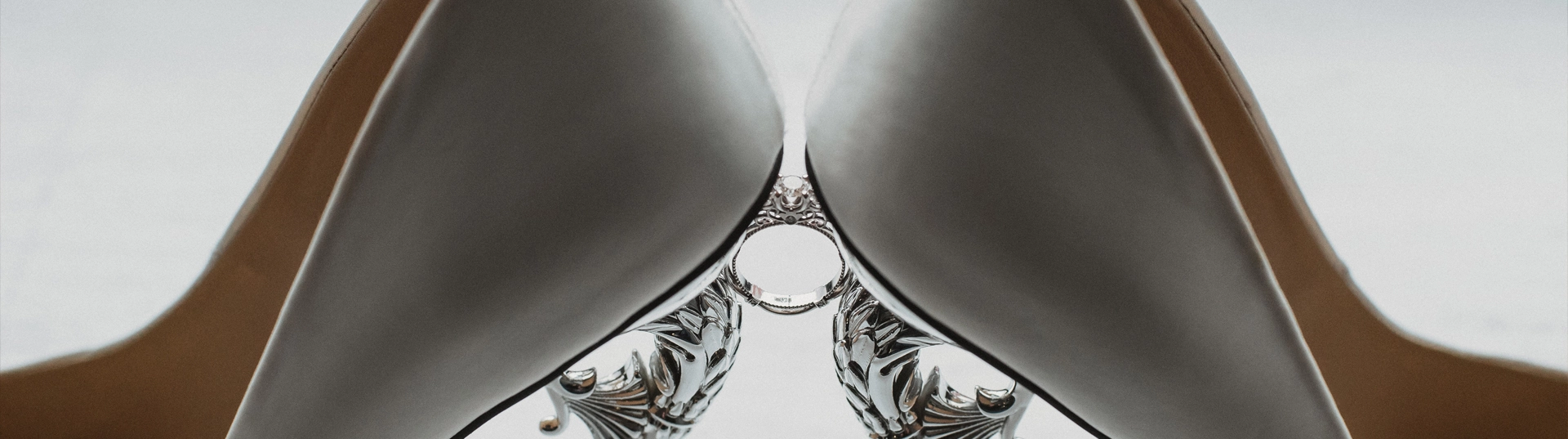

A wedding band is not just a piece of jewellery. It's a symbol you will wear every single day, for years and decades to come. That's precisely why choosing a diamond wedding band deserves more careful thought than almost any other jewellery purchase — not because it needs to be the most expensive ring you'll ever own, but because it needs to be exactly right.
A classic wedding band is a smooth, unadorned shank with no stones. A diamond wedding band adds one or more diamonds to that foundation, arranged in different ways: a single stone set at the centre, a continuous diamond line running along the shank, or pavé — small diamonds set closely together across the surface of the metal.
The main practical distinction: a ring with diamonds requires slightly more attention in daily wear. Pavé and channel settings have open areas where dirt can collect. With proper care, this is never a serious issue — but it's worth knowing from the start.
Single centre diamond — the most understated option. It sits somewhere between a classic band and an engagement ring in its visual weight. Ideal for those who want the presence of a diamond without an elaborate or busy design.
Diamond line or channel set — a row of equally sized diamonds running along the full shank or part of it. The most enduringly classic choice, and one that reads as genuinely elegant in virtually any context. Works beautifully alongside an engagement ring or worn alone.
Pavé — small diamonds set closely and densely into the metal so the shank appears to shimmer across its entire surface. Exceptionally luxurious and eye-catching, especially in natural light. Pavé does require more careful handling than a channel-set band.
Half-pavé or half-eternity — diamonds set only on the visible upper portion of the shank. More practical for everyday wear: the diamonds are fully visible when the hand is extended, while the inner surface remains smooth and comfortable.

If you already have an engagement ring, the wedding band needs to work alongside it. There are three approaches.
Matching metal. If the engagement ring is white gold, the band is white gold. The simplest and most reliable approach.
Contour or fitted bands. Some engagement rings are designed from the outset with a matching wedding band: the two pieces are shaped to sit flush against each other, forming a single unified piece when worn together.
Mixed metals. Yellow and white gold worn together stopped being a style mistake years ago and has become a genuine trend in its own right. If you're drawn to the contrast, wear it with confidence.
One practical point worth knowing: when a wedding band and engagement ring are worn together, they will rub against each other. Over time, this friction can wear down the softer metal or put stress on settings. The recommendation: choose both rings in the same metal and karat, or occasionally swap which finger each is worn on to distribute the wear evenly.

14k gold (585) — the optimal choice for a wedding band. Durable enough for daily wear, retains its colour and shape over years of use, and provides a reliable base for pavé and channel settings.
18k gold (750) — softer and richer in colour. A more prestigious choice, though slightly less resistant to surface scratches under the conditions of active daily wear.
White gold — the most popular choice for diamond wedding bands. It enhances the cool brilliance of the diamonds and reads as contemporary and refined.
Yellow gold — warmer and more traditional. Particularly beautiful with diamonds in the I–J colour range, where the warmth of the metal enhances rather than contradicts the slight warmth of the stone.
Shank width. For daily wear, 2–3mm is the practical sweet spot. Narrower looks more delicate; wider makes a more visible statement. If you'll be wearing the band alongside an engagement ring, factor in the combined width of both pieces.
Setting quality. For pavé and channel-set bands, the craftsmanship of the metalwork matters. The stones should sit level, secure and evenly spaced — check this carefully at the point of purchase.
Certificate. If the diamond is 0.3 carats or above, it should carry a certificate from GIA or IGI. For small pavé stones, individual certificates for each stone aren't standard practice — but the overall specifications of the piece should be clearly documented.
A diamond wedding band is a balance between the symbolic and the practical. It should be special enough to carry the weight of what it represents, and comfortable enough to wear every day without a second thought. Find that balance — and the ring will last a lifetime.