
10% OFF

Spin the wheel of wishes KIMBERLI and win the main prize - DIAMOND
We give gifts with every paid order. Send your phone number and reserve your prize.
The prize will be selected using a randomizer. You will receive an SMS message with a promo code for the prize after placing your order.
The promotion is valid from 18.01.2026 to 01.02.2026
*The promo code can be received only once per phone number:
*Does not apply to products from the OUTLET category!
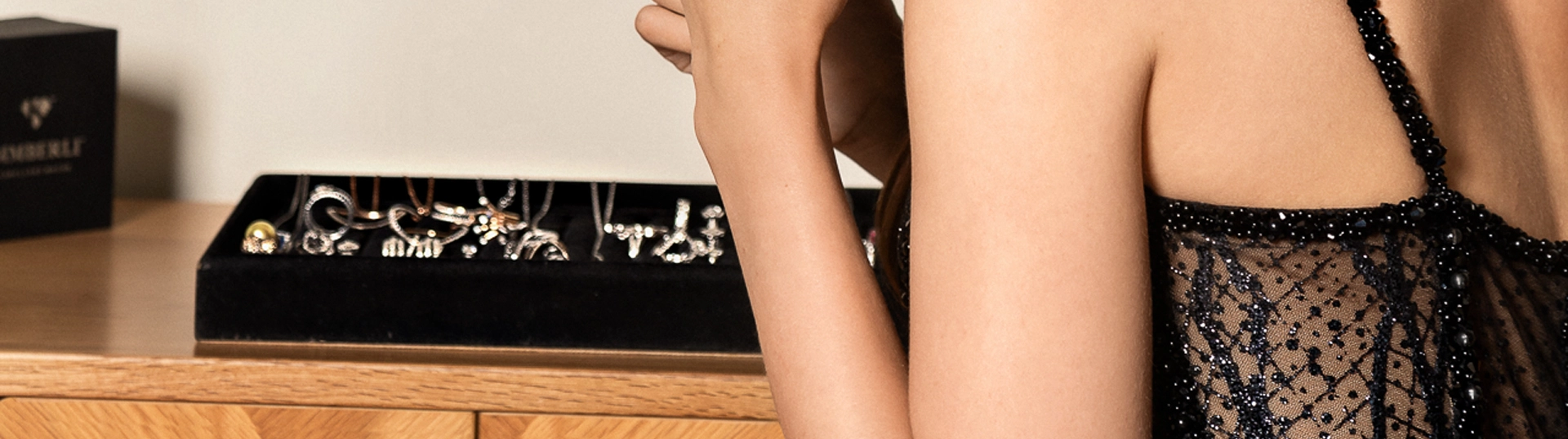

Gold jewelry with diamonds and precious stones is something that can last for decades. But only with proper care. Diamonds are the hardest natural material on earth, but that doesn't mean they're invulnerable. Sapphires, emeralds, and rubies are even more sensitive to chemicals, temperature, and mechanical stress. Here's what you really need to know.
Any stone jewelry has a setting—the place where the metal holds the stone. This is where skin oils, cream residue, soap, and dust accumulate. Diamonds are particularly prone to attracting oil—it's a physical property. Even after just one day of wear, a diamond's surface can become coated with a thin film that dulls its shine.
Colored stones—sapphires, emeralds, and rubies—are less "fat-loving" than diamonds, but are more sensitive to chemicals and temperature fluctuations.

The safest and most effective method is warm water with a few drops of mild dishwashing detergent.
Pour warm (not hot) water into a small bowl, add a few drops of dishwashing detergent, and soak the jewelry for 10-15 minutes. Then, using a soft toothbrush and gentle pressure, scrub the stone and setting, especially the underside where dirt accumulates. Rinse under warm running water and dry with a soft, lint-free cloth.
You can do this every 2-3 weeks if you wear the jewelry every day.
What not to do with diamonds: Don't use chlorine-containing products, bleach, or abrasive powders. Chlorine destroys the gold alloy—not immediately, but gradually. Ultrasonic cleaners can be used on diamonds in bezel settings, but they are not recommended for stones with cracks or for rings with prongs—the vibration can weaken the setting.
Sapphire is one of the most durable gemstones after diamonds. It can be cleaned in the same way: warm water, a drop of cleaner, and a soft brush.
But there's an important difference: many sapphires are heat-treated to enhance their color. Sudden temperature changes—immersing them in cold water after a hot bath, or vice versa—can affect the stone's color over time. Therefore, always use water at room temperature or slightly warm.
Ultrasonic cleaning is safe for sapphires as long as the stone is crack-free. If in doubt, avoid using it.

Emerald is the most delicate of the three classic gemstones. Almost all natural emeralds have internal cracks and inclusions, and most are treated with cedar oil or resin, which fills the microcracks and improves clarity.
This is why ultrasonic cleaners, steam cleaners, harsh chemicals, and even prolonged soaking in soapy water are strictly unsuitable for emeralds. Water washes the oil out of the cracks, causing the stone to lose its clarity.
Proper care for emeralds: wipe with a soft, damp cloth without any detergents. Have a jeweler clean them once a year, re-oiling them if necessary.
Ruby is second only to diamond and sapphire in durability. Warm water with a mild detergent and a brush is a safe option. Ultrasound is acceptable for rubies without cracks.
However, like sapphires, most rubies are heat-treated. Sudden temperature changes are undesirable.
Storage Guidelines
Store each piece of jewelry separately—diamonds scratch other stones and even gold. Ideally, store them in soft cloth bags or separate compartments in a jewelry box.
Avoid storing them in humid environments—the bathroom is not the best place for jewelry.
Remove jewelry before: swimming in a chlorinated pool, cleaning with chemicals, intense sports, and applying perfumes and creams directly to the jewelry.
When to see a jeweler
Once a year, it's worth taking your jewelry to a jeweler—especially if you wear it every day. The jeweler will check the security of the settings, polish the shank, and, if necessary, clean the stones with professional equipment. This takes a little time, but significantly extends the life of the piece.
Proper care is easy. A few simple habits—remove your jewelry before chemicals and sports, clean it every few weeks, and store it separately—and your jewelry will retain its shine for decades.